


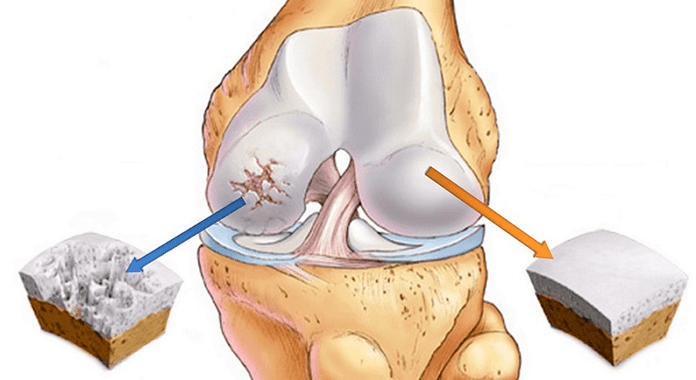
Arthrosis, more accurately called osteoarthrosis, is a chronic dystrophic disease, which is caused by the destruction of cartilage tissue in the joints, therefore the treatment of joint arthrosis is very necessary.If such a disease occurs, an irreversible inflammatory process begins at the ends of the bones and in the tissues around the joints, which leads to their degeneration.In addition, arthrosis refers to several additional degenerative joint diseases, which are characterized by many similar causes and mechanisms of development.
Arthrosis, according to various statistical information, affects up to 80% of the population of our planet, which makes it the most frequently diagnosed joint disease.And among all diseases it is in 3rd place.
The older a person is, the higher the chance of developing arthrosis.Both sexes are equally susceptible to it, except that interphalangeal joint arthrosis occurs most often in women.The working population over the age of 30 is most affected.From year to year the number of patients only increases.
Arthrosis causes diseased joints
The development and cause of arthrosis is accompanied by a deterioration of metabolism in the joints, which causes the cartilage tissue to lose its elasticity.The reason for this may be the complete or incomplete loss of proteoglycans in the cartilage, which most often occurs due to severe cracks in the cartilage.Loss of this complex protein can also occur due to disruption in its production by joint cells.
According to experts, the destruction of cartilage can occur due to: hormonal imbalance, deterioration of blood flow in the joints, deterioration of metabolism, due to heredity, due to old age, injuries, and other diseases, including rheumatoid arthritis and lichen planus.However, the most important cause of arthrosis is excessive pressure on the joint at the most vulnerable time.
Additional causes of joint arthrosis include the following:
- previous injuries;
- excess weight;
- inflammation due to the development of a severe form of purulent arthritis;
- poor daily diet;
- hypothermia;
- Libman-Sachs disease;
- intoxication of the whole body;
- frequent colds;
- syphilis, tuberculosis, purulent inflammation of the urinary tract, spring-summer tick-borne meningoencephalitis;
- thyroid disease;
- chronic bleeding (hemophilia);
- femoral head osteochondropathy.
The causes of Osteoarthritis are genetic:
- arthrosis of bones and fingers, possibly hereditary;
- dysplasia - the result of abnormal processes during the development of joints and ligaments that occur in the womb - leads to joint wear and arthrosis;
- pathogenic changes in collagen type 2 - when the fibrillar protein of connective tissue is damaged.
People with the following professions or hobbies are most susceptible to this disease: masons, fishermen, blacksmiths, loaders, athletes.
Symptoms of arthrosis for various reasons
Symptoms of arthrosis can be divided into four groups:
- Painful nature.The occurrence of pain indicates the initial symptoms of arthrosis in the first place.Pain can be caused by many reasons, but with arthrosis it is special.First, the pain is characterized by a sharp manifestation, and a person may feel some discomfort when moving.The pain goes away with rest.At night, pain can only be felt when turning from side to side.During rest, the pain becomes constant only in the form of a severe disease.In the early stages of the disease, pain is only felt during heavy exercise or during palpation.As the condition worsens, the pain increases, and more and more rest is needed to eliminate it.In severe forms, the pain becomes unbearable, osteophytes appear due to the thinning of cartilage and exposed bones.Bad weather and a full moon made the pain worse.
- The appearance of dryness.Symptoms of this type are also very important when diagnosing.It happens because of the friction between rotating bones, the ends of which have lost their softness and elasticity.Crunch may indicate other diseases, or may not be accompanied at all, but with arthrosis it has a special feature, distinguished by its "dryness".This causes pain.
- Impairment of joint motor function.This symptom is typical of the advanced stages of arthrosis, and occurs due to the appearance of bone tumors in the joint, which causes stiffness and almost completely fills the joint space.The result is partial immobilization of the joint.
- Joint defects.Changes in the shape of the joint occur due to the growth of osteophytes on the bone and the entry of synovial fluid into the joint.These symptoms are characteristic of the most advanced form of the disease.
Arthrosis can alternately move from a state of exacerbation to a state of remission, which is very disturbing to diagnose the disease itself.For this reason, it is recommended to consult a doctor to confirm the diagnosis.
Thanks to the x-ray, the doctor will be able to determine the signs that indicate one of the four stages of arthrosis:
- Stage 1. The articular lumen may be slightly reduced;no osteophytes were observed.
- Stage 2. Lumen reduction may be more pronounced, and osteophytes begin to form.
- Stage 3. Narrowing of the lumen is clearly observed, and a large number of osteophytes are present.
- Stage 4. The articular lumen is almost completely gone, and pathological changes in the shape of the joint begin due to numerous osteophytes.
Methods of treatment for arthrosis
It is better to start the treatment of arthrosis in the early stages of its development, and it should be comprehensive and pathogenetic.Treatment should be aimed at eliminating the causes that aggravate the disease.In addition, it is necessary to eliminate pathogenic changes caused by inflammation and restore joint function.
An integrated approach to the treatment of joint diseases consists of the use of drugs and physiotherapeutic measures.It is possible to prescribe sanatorium-resort therapy, because in some cases the climate, mineral water and mud have an effective effect.
Treatment of joint arthrosis consists of several basic principles:
- diseased joints should not be subjected to excessive pressure, and during treatment they should be practically absent;
- comply with orthopedic orders;
- engage in recreational physical education;
- conduct physiotherapy, which consists of laser, shock wave, electro and magnetic therapy;
- undergoing treatment at a health resort at least once a year as prescribed by a doctor;
- oxygen therapy - feeding the inside of the joint with oxygen;
- drug treatment;
- methods of intraosseous administration of drugs and metaepiphysis decompression;
- establish proper nutrition.
Drug therapy consists of the use of the following drugs:
- Anti-inflammatory drugs.Thanks to an integrated approach, you can not only stop the progression of the disease, but also make your life a little easier.In part, drug treatment aims to eliminate pain and inflammation in the joints.For this purpose, non-steroidal drugs are used.Experts advise not to use the oral method to administer these drugs, as they can cause quite severe stomach pain.In this case, depending on the specific drug, intravenous or intramuscular injection is used.Additional means, such as ointments, are practically not used, because their effectiveness is very low.
- Corticosteroid hormones.The drugs are prescribed if the disease is aggravated.The drug is injected into the joint.For external use, use patches, tinctures or ointments.
- Chondroprotectors.Prescribed for the restoration of cartilage tissue and to improve the quality of the structure of the synovium.Among these drugs, glucosamine and chondroitin sulfate are most often preferred.The duration of this course can be significant until improvement occurs.However, if the required results are not observed within six months, then the drugs no longer need to be taken.In addition, along with chondroprotectors, it is recommended to inject drugs into the joints with the addition of hyaluronic acid.Such drugs help the formation of articular cartilage cells.
In severe cases, the prescription of narcotic analgesics is not excluded.But such drugs are prescribed very rarely, only in cases where other drugs do not have the desired effect.
Proper nutrition for arthrosis
An important role in the deterioration of the disease should be given to proper nutrition.It must be balanced.You can't eat less, but you can't overeat either.Due to excess body weight, the load on the joints will increase, and in the case of malnutrition, the cartilage tissue will lack important microelements, as a result of which it will deteriorate.However, the main thing is to create a diet that will help you lose excess weight.You need to give up fast carbohydrates, which are found in sweets and flour products.In addition, the consumption of alcoholic beverages, especially beer, is prohibited.
Fish dishes are welcome, there are almost no restrictions.Only types of fat should be avoided - because of the high calorie content, you can gain weight again.
Jelly meat is highly valued in the treatment of arthrosis.It may seem strange, but all doctors without exception recommend using it because it contains a large amount of different microelements.The collagen found in jelly meat is useful because it is part of the connective tissue, so in this case it can replenish the amount lost in the body.As a result, joints get better mobility, and cartilage tissue becomes more resilient and elastic.
Vitamins, especially group B, play an important role for the body as a whole in this disease.This group allows a person to normalize metabolic processes in the body.A well-functioning metabolism will allow your joints to feel great.Thiamine, after entering the body from nuts or beans, will accelerate the synthesis of proteins, fats and carbohydrates.
To increase hemoglobin, you need pyridoxine, which can be found in bananas, beans, potatoes and cabbage.It is advisable to pay attention to vegetables and nuts - they contain folic acid.The body also needs liver, mushrooms, eggs and fermented milk products.The entire list of these vitamins, of course, is contained in the vitamin complex, but it's no secret that natural elements are better absorbed, which means the healing process will be faster and more effective.
When eating, you should follow basic simple rules:
- Before going to bed, you should not eat food that is difficult to digest, because it can trigger an attack of arthrosis;
- food should be taken more often, but in small portions;
- Monitor your weight all the time so that it does not increase, otherwise a large load on the joints will be ensured, buy good products for weight loss and weight control;
- during the period of easing the disease after eating food, taking a walk;
- The daily diet should be balanced and prepared together with the doctor.
It is very important to get help from a doctor on time.By following some of his instructions, you can not only stop the development of arthrosis, but also reverse it, which will give you the opportunity to enjoy your normal life again.